
Benefits of Industrial Hemp
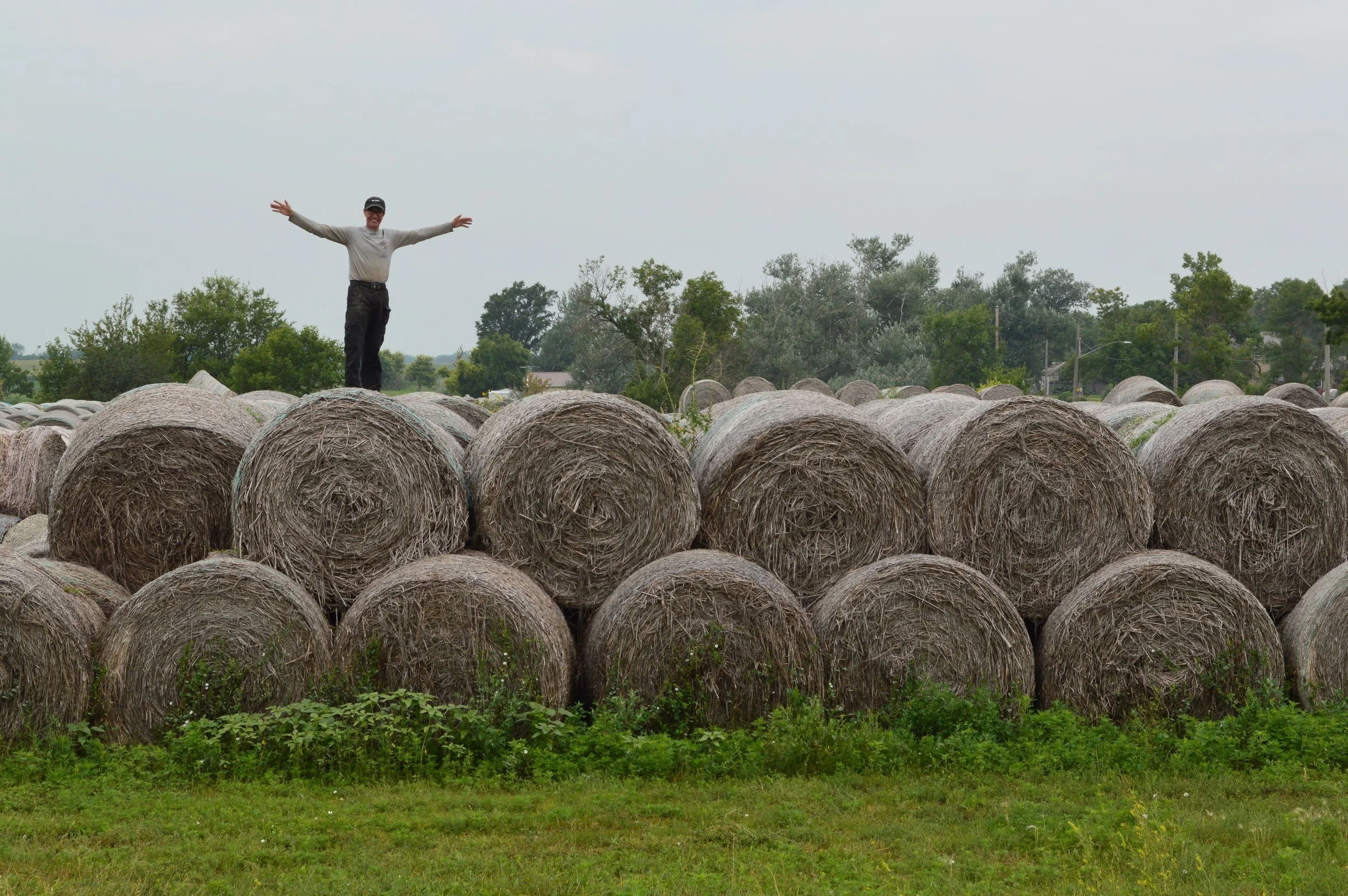
2024 Hemp Stockpile ready to process.
JOAN’S HEMP NEWSLETTER
DID YOU KNOW…
DID YOU KNOW SINCE 1974 the US government has known the cannabis hemp helps to cure cancer! The research was done in the Medical College of Virginia. They were funded by the National Institute of Health to fine evidence that marijuana damages the immune and instead found that THC slowed the growth of 3 kinds of cancers in mice. The DEA quickly shut them down and all further cannabis/tumor research. In 1967 President Gerald ford put an end to all public cannabis research and granted it to pharmaceutical companies. In 1983 the Reagan/Bush Administration told all colleges and researchers to destroy all 1966-76 cannabis research work.
Did you know….Hemp Batteries are 8 times more powerful than Lithium batteries.
US Hemp Roundtable 2026 FARM BILL MAY 4, 2026
House leaders declined to address the looming 2026 Farm Bill hemp ban in the bill passed last week, but the U.S. Hemp Roundtable thanked Representatives James Comer and Morgan Griffith for spotlighting the issue through a proposed amendment.
Rep. Comer warned the Rules Committee that the hemp industry—supporting 320,000 jobs, $28.4 billion in economic activity, and $1.5 billion in state tax revenue—could be “largely eliminated” without action. He urged Congress to allow more time to create a regulatory framework that protects jobs, curbs bad actors, and sets clear labeling and testing standards.
Rep. Griffith echoed concerns about unregulated, poor‑quality imported hemp products and stressed the need for FDA oversight. He emphasized that lawmakers need time to adjust policy responsibly, which the amendment aimed to provide.
Although the bipartisan amendment—also backed by Reps. Ilhan Omar and Kelly Morrison—was withdrawn without a vote due to leadership opposition, it succeeded in drawing critical attention to the uncertainty facing hemp farmers and businesses as federal policy changes approach.
Industrial Hemp Construction: Building a Greener Future with Hempcrete and Carbon-Negative Materials
Explore how industrial hemp construction, particularly hempcrete, is revolutionizing the building industry with sustainable, carbon-negative materials.
GREAT WEB SITE FOR HEMP
www.indhemp
www.hemptraders
HEMP
Grown by Nature Restricted by Fear & Greed
Save the Bees
Pollen source for the Bees
One acre of hemp seed, which can be pressed into 698 lbs. of seed cake so 31 gallons of oil can be extracted.
SOUTH DAKOTA in 2024 grew more hemp than any other state in the USA
The 2025 report on South Dakota showed the nation’s hemp leader, fell by 70%. This is really sad as they were one of the few states that leaned almost exclusively into grain, fiber. and strong in building materials as well.
March 3, 2026, the Senate bill 39 was passed in S.D. This ended its state-run industrial hemp program, shifting oversight of growers to the U.S. Dept of Agriculture. Fees from hemp farmers covered only abut 11% of program costs in 2025.
Wisconsin and Ohio also ended its states program so farmers in those states will have to apply for their licenses through the USDA.
Let’s hope that the new Regenerative Farming program that the USDA has put into effect this year will stimulate the growing of more hemp for restoring the soil and giving the farmers a perfect rotating crop. A hemp crop will take less water and chemicals plus is the best plant to take in more CO2 while the hemp roots will start cleaning up the metals and chemicals out of the soil.
by Joan
Hempitecture has whole-home solutions that are better for you and the Earth. Check out this company if you are thinking of building anything.
Hemp Wool Thermal Insulation stores carbon, unlike other materials that emit significant amounts of carbon to achieve the same purpose, make buildings more energy efficient. sales@hempitecture.com

Why do we want plastic made from hemp!
WHAT ARE YOU WEARING!!
Is it something made out of crude oil and old plastic bottles or is its natural plant fiber clothing??? Learn about what the micro-fibers are doing to not only our kids but us!!!
Joan offers one-hour Hemp lectures.
In PERSON OR on ZOOM
Why Industrial Hemp is so Important Today: Understand the difference between marijuana and industrial hemp, some history, plant itself and uses today. Why Hemp is very important to our environment as well as our fiber industry. Lecture adjusted to the audience watching.
Lecture with a power point presentation
E-mail: spincotton@yahoo.com
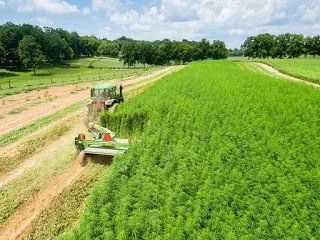


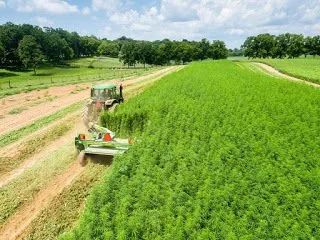
HEMP TRADER has a lot of very nice videos regarding the growing and processing of hemp. Also they have small packages of hemp seed and an extensive line of fabrics. Take a look at the new “green machine” that may revolutionize the harvesting and processing hemp.
You Tube: Green Decorticating
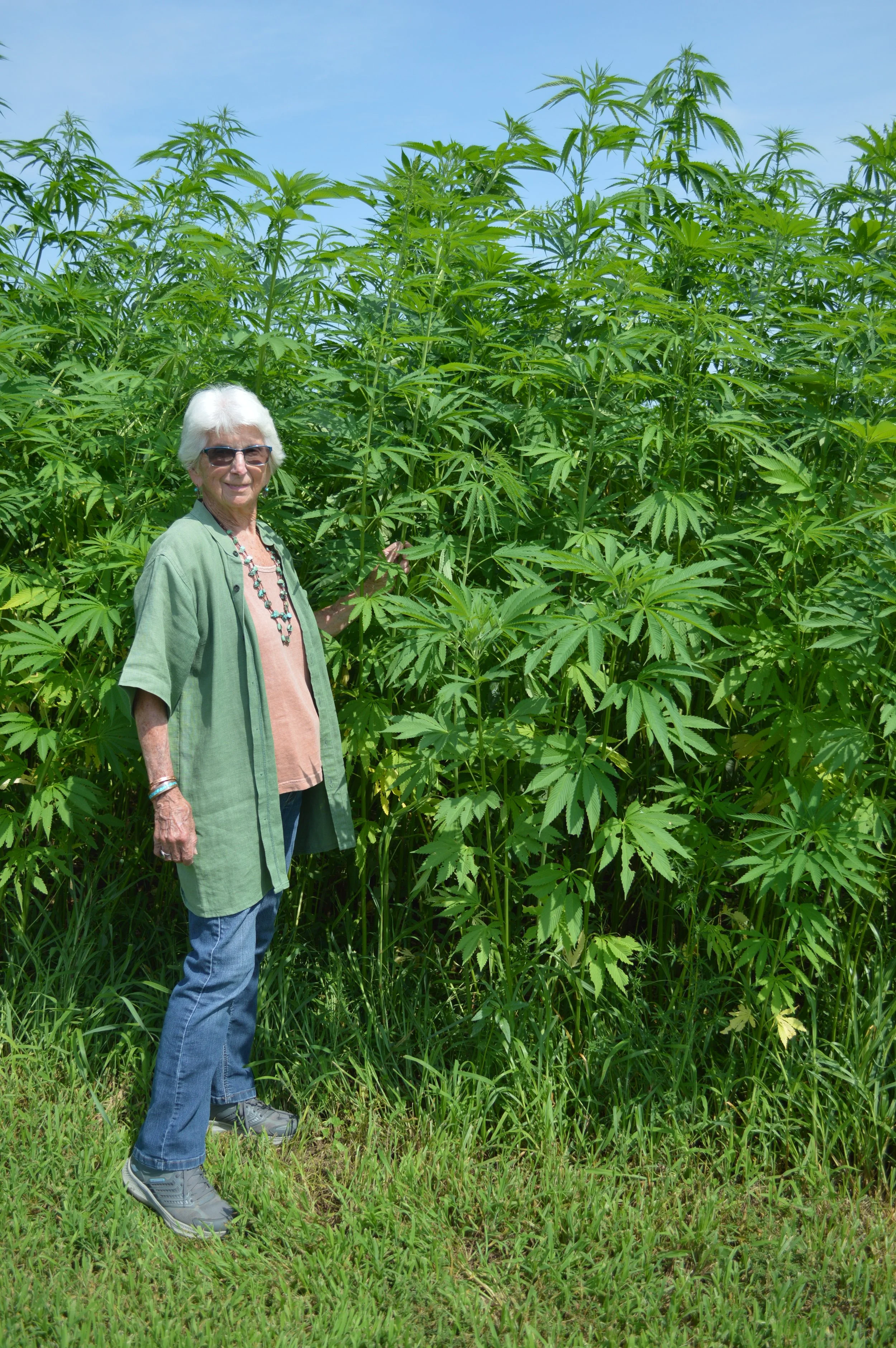
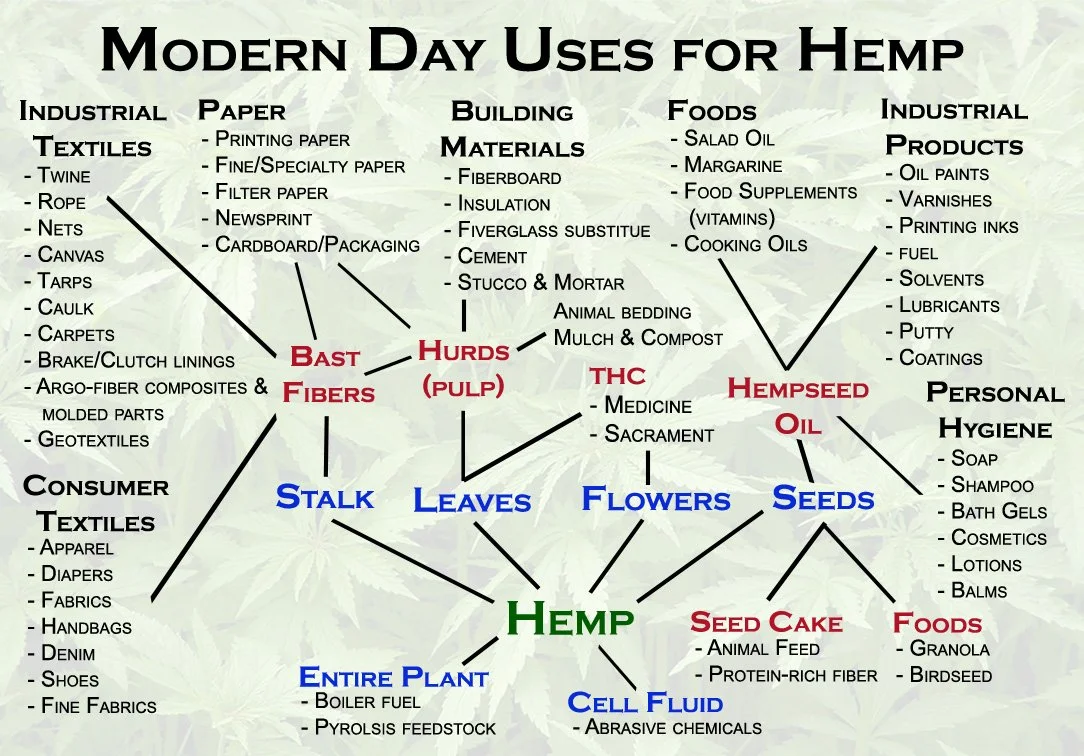
Hemp seeds contain a protein that is more nutritious and more economical to produce than soybean protein. Hemp seeds are not intoxicating. Hemp seed protein can be used to produce virtually any product made from soybean: tofu, veggie burgers, butter, cheese, salad oils, ice cream, milk, etc. Hemp seed can also be ground into a nutritious flour that can be used to produce baked goods such as pasta, cookies, and breads.
Hemp seed oil can be used to produce non-toxic diesel fuel, paint, varnish, detergent, ink and lubricating oil. Because hemp seeds account for up to half the weight of a mature hemp plant, hemp seed is a viable source for these products.
Just as corn can be converted into clean-burning ethanol fuel, so can hemp. Because hemp produces more biomass than any plant species (including corn) that can be grown in a wide range of climates and locations, hemp has great potential to become a major source of ethanol fuel.
Literally millions of wild hemp plants currently grow throughout the U.S. Wild hemp, like hemp grown for industrial use, has no drug properties because of its low THC content. U.S. marijuana laws prevent farmers from growing the same hemp plant that proliferates in nature by the millions.
From 1776 to 1937, hemp was a major American crop and textiles made from hemp were common. Yet, The American Textile Museum, The Smithsonian Institute, and most American history books contain no mention of hemp. The government's War on Drugs has created an atmosphere of self-censorship where speaking of hemp in a positive manner is considered politically incorrect or taboo.
United States Presidents George Washington and Thomas Jefferson grew hemp, used products made from hemp, and praised the hemp plant in some of their writings.
No other natural resource offers the potential of hemp. Cannabis Hemp is capable of producing significant quantities of paper, textiles, building materials, food, medicine, paint, detergent, varnish, oil, ink, and fuel. Unlike other crops, hemp can grow in most climates and on most farmland throughout the world with moderate water and fertilizer requirements, no pesticides, and no herbicides. Cannabis Hemp (also known as Indian Hemp) has enormous potential to become a major natural resource that can benefit both the economy and the environment.
Click Here for Newsletters
Woops, went to ND to help with my new great twin grandson’s and it ended up with no free time!!! Will try to get a fall one ready soon!!
The end of August 2026 those working on the Continuing Resolution has brought the concern about hemp to President Trump. Hopefully he will have time to listen and if so, I believe he will do right. Trump is not controlled by anyone including the timber, oil, alcohol or pharisaical companies. Anyone who truly learns about hemp will see it not just good for the environment but for mankind as well.


Check out Bulk Hemp Warehouse a nice source of hemp fiber and information on hemp.


GO TO: LET’S TALK HEMP on line.
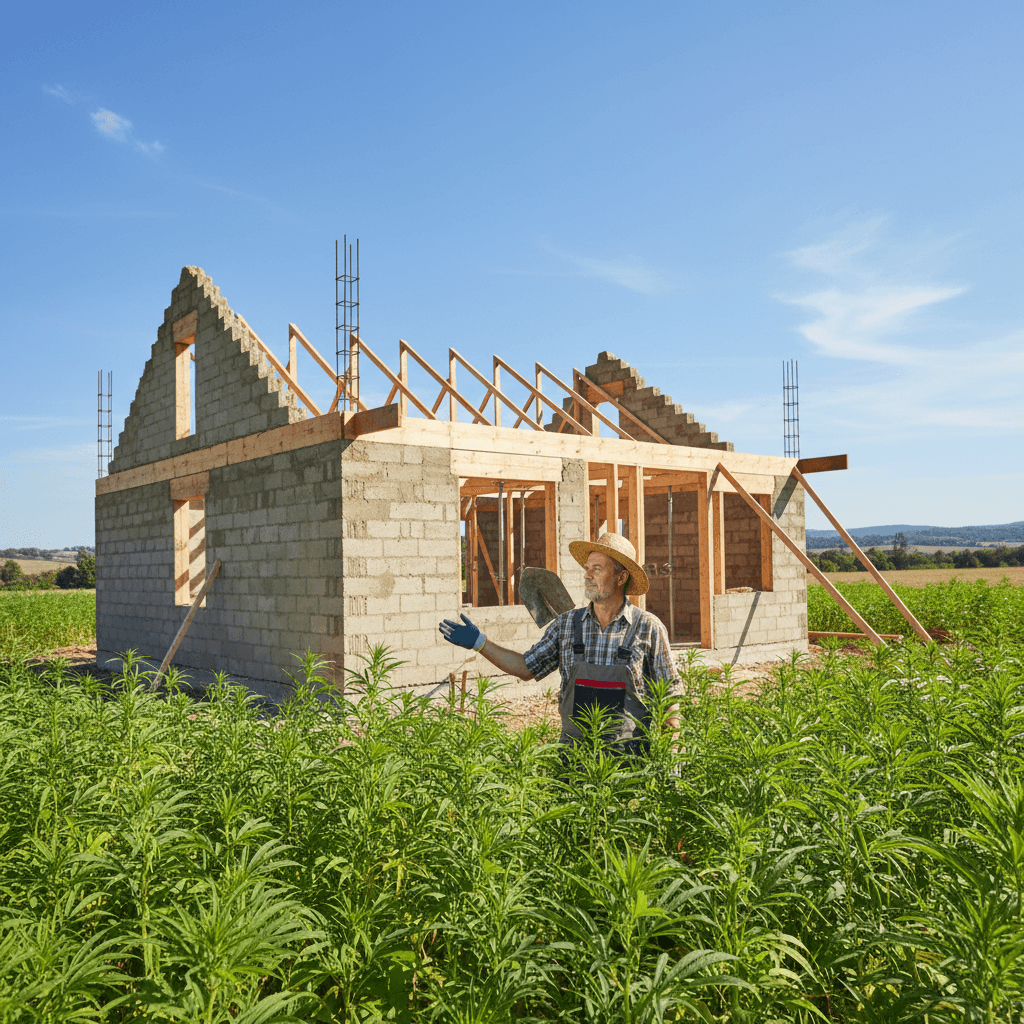
Hemp plays a crucial role in cleaning and improving farmland through a process known as phytoremediation. Here's how hemp contributes to enhancing the quality of farmland:
Heavy Metal Removal
Hyperaccumulator:Hemp has the ability to absorb and accumulate heavy metals like cadmium, lead, and nickel from contaminated soil, storing them in its tissues.
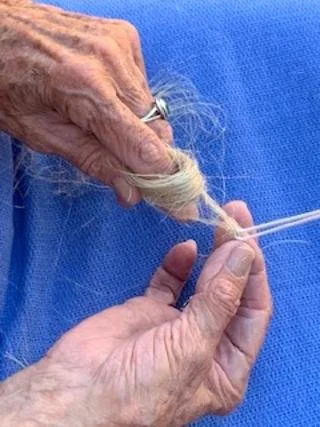
Spinning hemp off the fold.
Devin Helman wrote a very nice hemp article for Spin-Off Feb. 2023 Worth looking it up and reading.
DID YOU KNOW? bees love hemp for one of their pollen sources, especially the hemp grown for seed and fiber.
INDUSTRIAL HEMP
93% of paper comes from trees. 26% of total landfill waste is our own forests in the form of paper. Hemp is a rapidly renewable alternative and it’s here to stay.
1 acre of Hemp can produce as much paper as 4-10 acres of trees over a 20 year cycle and Hemp grows in 4 months, whereas trees take 20-80 years.
Hemp Recycles www.hemprecycles.org
9-25-2026 Hemp Roundtable Goes to Capitol Hill with The Message: Regulate, Don't Ban Hemp!
Members of the U.S. Hemp Roundtable traveled from across the country to Washington, DC, last week to meet directly with lawmakers and advocate for the future of hemp. They met with more than 25 congressional offices, including key Senate allies and congressional leaders, to advance a common message: America needs a long-term regulatory framework for hemp that provides certainty for businesses, protects consumers, and supports American farmers.
This is a critical moment for the hemp industry. While Congress recently extended current hemp provisions, a federal ban on most consumable hemp products is now scheduled to take effect in December unless lawmakers act. The USHR's message on Capitol Hill was clear: Congress must enact a workable regulatory framework before the December deadline to avoid devastating consequences for farmers, manufacturers, retailers, and consumers who rely on hemp products every day.